Overview
This activity aims to help students move from understanding a sustainability topic to recognizing its interconnected impacts across systems, stakeholders, and time horizons — and to identify leverage points for responsible action.
Learning Objectives
By the end of this activity, students will be able to:
- Apply systems thinking to a sustainability topic from their TASK™ Study Guide.
- Identify direct, indirect, and long-term ripple effects of decisions.
- Propose strategic leverage points for positive intervention.
- Reflect on their role as future decision-makers within interconnected systems.
Preparation (for the instructor)
This activity can be done individually or in small groups. Please adapt the preparation and instructions accordingly.
- Ensure students have completed a TASK assessment and accessed their personalized Study Guides.
- Ask students in advance to select one Study Guide topic they want to explore more deeply. If doing it in groups, make sure to bring students together that have access to the same guide.
- Prepare:
- Large sheets of paper or digital whiteboard tools (Miro, Mural, Jamboard, etc.).
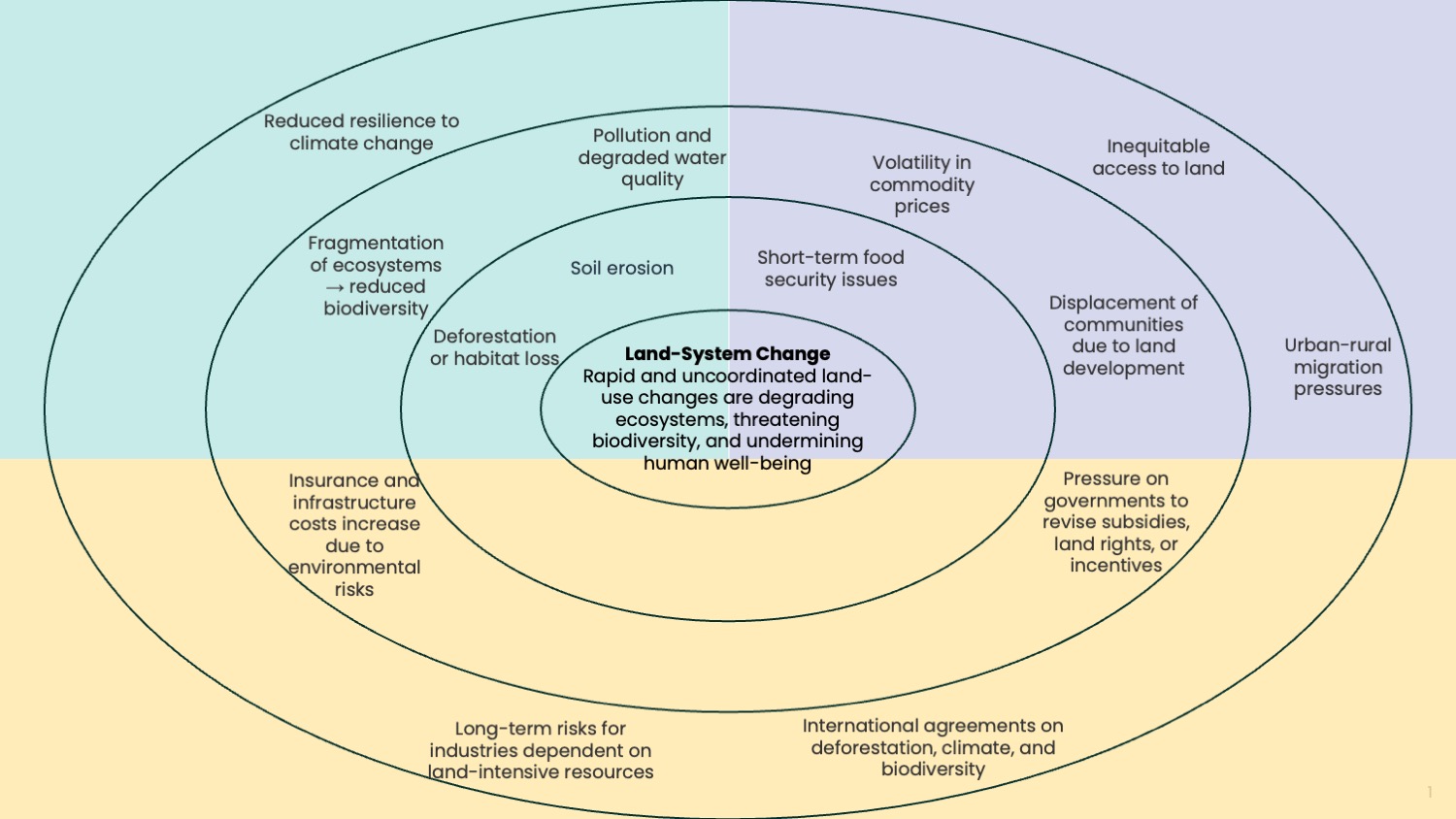
- A simple mapping example (central issue → interconnections).
Download
- Optional: Provide a short primer on systems thinking and leverage points
Resources (from our Intro2TASK)
Instructions (for students)
Step 1: Select your focus
Choose one topic from your TASK™ Study Guide. Review:
- Overview
- Key topics and themes
- Learning objectives
- At least two curated resources
Step 2: Create your interconnections map
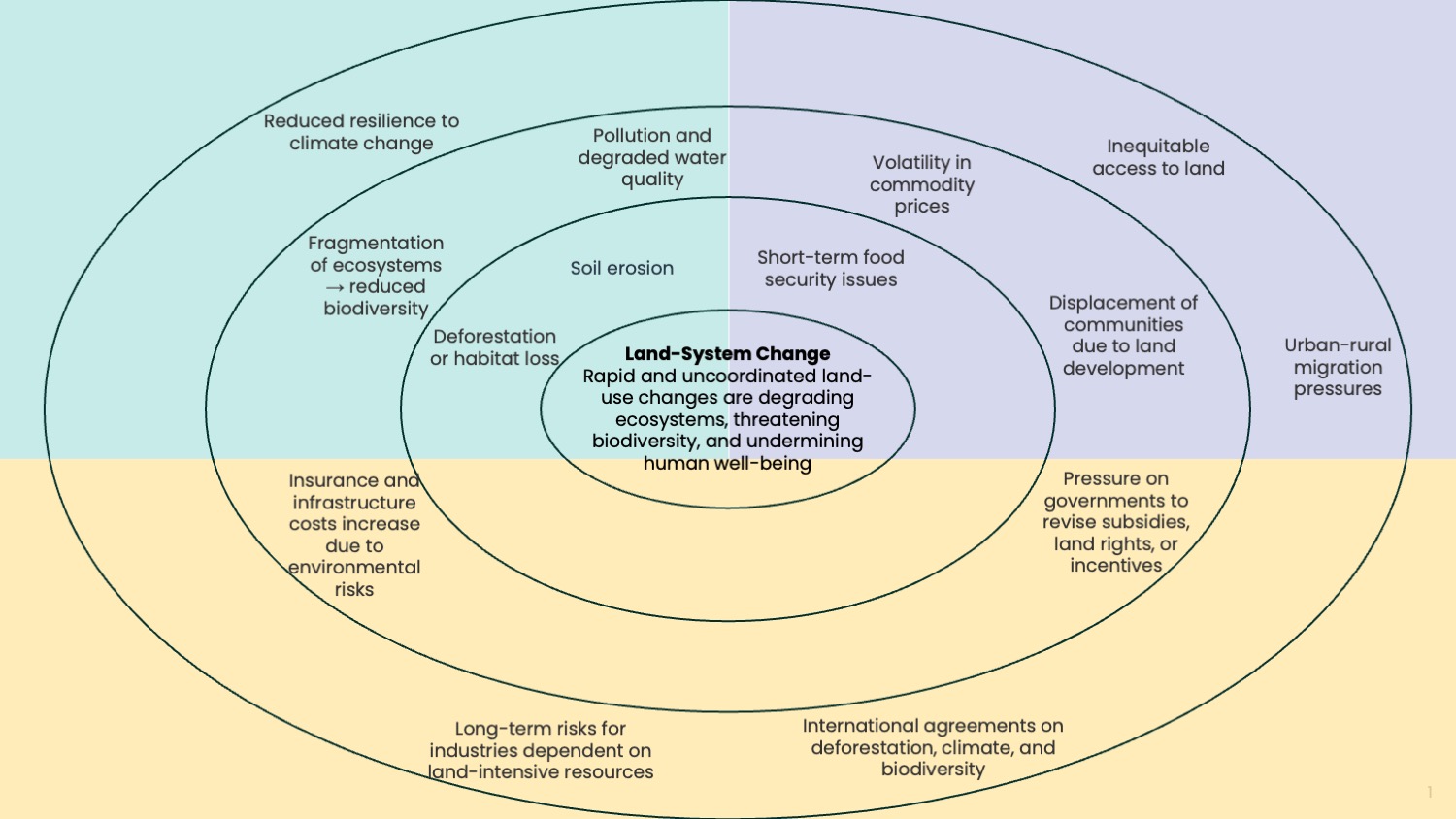
- Write the core issue at the center
- Draw expanding rings and map:
- Immediate impacts (short-term, direct effects)
- Secondary impacts (indirect effects)
- Long-term consequences (future generations, environment, systemic shifts)
For all, consider impacts on:
- Environment
- Human welfare (human needs, society, cultural norms, etc.)
- Policies and economic systems
See an example
Iteration and feedback
Systems thinking can be challenging. It is common to focus first on the most visible or immediate impacts while overlooking deeper, indirect, or long-term ripple effects. For this reason, you can also design this activity to include a feedback loop.
Step 2 (with feedback round)
Step 3: Identify leverage points
Explore:
- Where could an intervention shift the ripple positively?
- What decisions matter most?
Propose 1–2 high-impact leverage points on your map and outline how they impact the immediate, secondary and long-term rings.
Disciplinary relevance
To ensure this activity feels meaningful, adapt the “Identify leverage points” step to the students’ fields of study.
You may:
- Provide discipline-specific prompts (e.g., policy levers, technological innovation, financial instruments, governance mechanisms).
- Invite students to articulate how power, influence, and responsibility manifest differently in their profession.
Encourage students to move from abstract leverage to profession-specific intervention.
Deliverable
- A completed visual impact ripple map
- A 500-1000 word report explaining your sustainability impact ripple map (optional)
- Introduction:
- Introduce the core problem clearly
- Explain why it matters in a broader context (society, economy, environment, policies)
- Connect to your discipline (policy, engineering, business, etc.) to frame relevance
- Describe impacts: Explain in further detail each point added to the visual map
- Describe your leverage points: Explain in further detail your proposals for intervention, explaining how they impact the immediate, secondary and long-term consequences previously identified.